




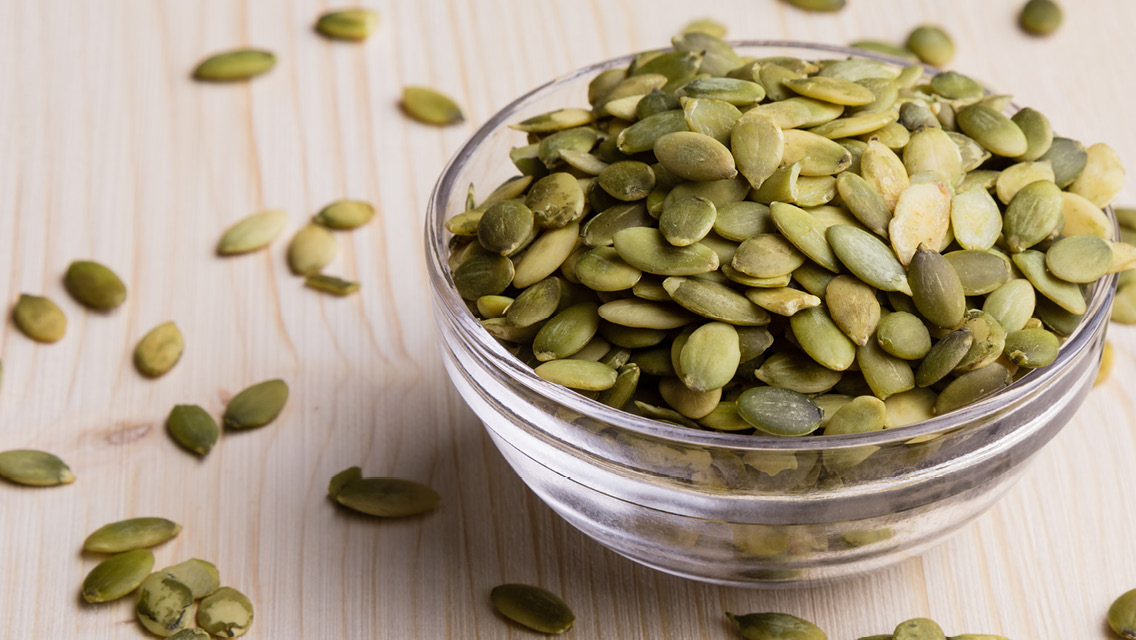
Pumpkin seeds, with their rich, earthy flavor and powerful nutritional profile, make a tasty addition to both sweet and savory meals. We often think of pumpkin seeds as an autumnal delicacy, but they are available – and delicious – year round.
Food Basics
Pumpkin seeds, also called pepitas, are flat, dark-green seeds with a light, nutty taste. Straight out of the pumpkin, they’re often encased in teardrop-shaped husks. If a recipe calls for pumpkin seeds, it’s usually referring to already husked pepitas, which is how pumpkin seeds are most often sold. When purchasing, choose seeds that show no sign of shriveling, moisture damage or insect damage.
Pumpkin seed oil is also available at select stores. Because of its strong flavor, this khaki green, fairly thick oil – pressed directly from pepitas – is usually blended with other oils for use in salads and cooking. Pumpkin seed oil is concentrated in polyunsaturated fatty acids, so it must be used only in recipes that don’t call for heat. Heating changes the molecular structure of the oil and releases cancer-causing free radicals.
Nutritional Know-How
Pumpkin seeds contain no starch, are lower in fat than most nuts, and are an excellent source of protein and essential minerals. They’re also rich in vitamin K, which may help prevent cancer, rheumatoid arthritis and osteoporosis. Each seed contains more than 50 percent oil, which has a notable amount of carotenoids, zinc and omega-3 fats. Zinc has been shown to help reduce tissue inflammation, while heart-healthy omega-3 fats are also known to promote healthy skin and optimum brain function. The phytosterols in pumpkin seeds inhibit the absorption of intestinal cholesterol, which may help reduce cholesterol in the bloodstream, bolster the immune system and decrease the risk for some cancers.
Kitchen Tricks
- After removing fresh seeds from a pumpkin, rinse them thoroughly to remove the pulp. Lay out evenly on a paper towel. Once dry, remove any remaining pulp strings. For roasting tips, see “Eat Up!” below.
- You can eat fresh seeds with or without the husks. To de-husk, crack shells open with your teeth the same way you would a sunflower seed.
- De-husking more than a few whole pumpkin seeds is a tedious task. If a recipe calls for a sizeable quantity, consider buying the seeds ready-shelled. Most grocery stores carry already-husked pumpkin seeds in bulk.
- Pumpkin seeds will keep easily for one to two months, or twice as long if kept in the refrigerator.
Eat Up!
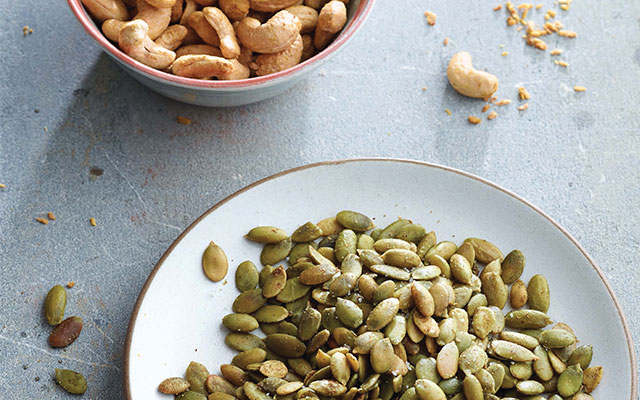
Pumpkin seeds can be eaten raw or roasted. To roast pumpkin seeds with or without the husks, first lightly coat them with melted butter or canola or olive oil on both sides. Lay out evenly on a baking pan and let dry overnight. Roast in a 160-degree F oven for 15 to 20 minutes, stirring occasionally. Season while hot with coarse sea salt or a mixture of cayenne pepper and honey for a naturally sweet-and-spicy snack. Roasted or raw pepitas can be used in a variety of ways:
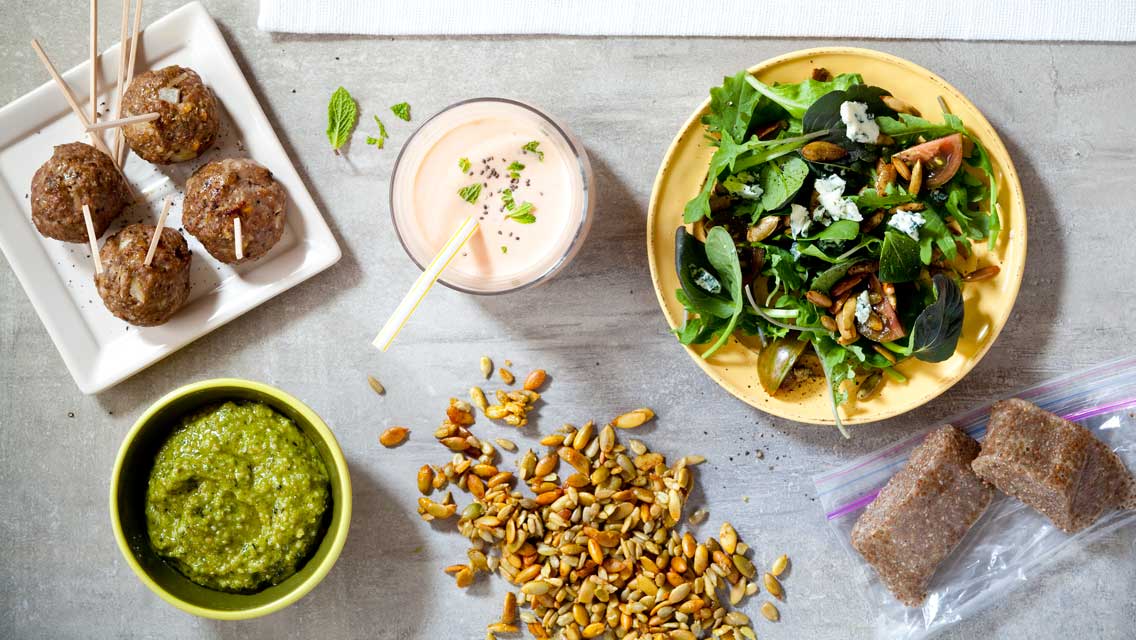
- Stir chopped pepitas into hot or cold breakfast cereal.
- Sprinkle pumpkin seeds on green salads and stir into fruit salads, like Waldorf or pear salads.
- When making smoothies, blend pepitas with fresh fruit for a boost of protein and a slightly sweet and nutty flavor.
- Replace pine nuts with roasted pumpkin seeds when making pesto to reduce its calorie and fat content, while increasing its protein value.
- Serve on pizzas, soups, pasta, grilled veggies or fresh-cooked fish entrées.
- Substitute pumpkin seed oil for canola, olive or other nut oils when making light salad dressings or drizzles that don’t require heating.
- Try this Spiced Roasted Pumpkin Seeds recipe.
Fresh Fruit Salad with Pumpkin Seed Vinaigrette
Makes four servings
Salad
- 2 segmented, peeled oranges
- 1 segmented, peeled grapefruit
- 2 segmented, peeled blood oranges
- 1/2 cup julienned jícama, about 1/4 of a jícama
- 1/2 head of romaine, cut into thin slices
- 4 tsp. toasted, shelled pumpkin seeds, sprinkled with 1/2-tsp. chili powder
- 1/2 of an avocado, cut into 8 slices
Dressing
- 1 cup fresh orange juice
- 1 tbs. fresh lime juice
- 2 tsp. fresh lemon juice
- 1/4 tsp. chili powder
Directions
- For the salad, in a mixing bowl, toss the oranges, grapefruit, jícama, romaine and pumpkin seeds.
- For the dressing, in a mixing bowl, whisk together the dressing ingredients and set aside. Toss the salad with the dressing.
- To serve, divide the salad among four plates. Lay two spears of avocado on top of each salad.
Per serving: Calories 150; Protein 3 g; Total Fat 5 g; Saturated Fat 1 g; Carbohydrates 25 g; Dietary Fiber 5 g; Cholesterol 0 mg; Sodium 5 mg
Mole Verde with Chicken
Makes four servings
For the Mole Verde
- 2 tbs. shelled pumpkin seeds
- 3 cups chopped tomatillos
- 1 tsp. minced, roasted jalapeño
- 1 1/2 tsp. minced, roasted poblano chili
- 1/4 cup diced yellow onion
- 1/2 tsp. minced fresh garlic
- Sachet: 1 cinnamon stick, 2 garlic cloves and 1/4 teaspoon ground cumin
- 2 cups vegetable stock
- 1/4 cup finely chopped cilantro
- 1/2 cup packed fresh spinach
- 2 tsp. honey
For the Chicken
- Olive oil cooking spray
- 8 ounces fresh, skinless chicken breast, diced
- 1 cup mole verde
- 1/2 cup chicken or turkey stock
- 1/4 cup button mushrooms, cut into quarters
- 2 tsp. diced red onion
- 1/2 cup diced tomatillos
Directions for the Mole:
- Roast pumpkin seeds in a dry sauté pan over medium-low heat until they are light brown and there’s a nutty aroma.
- Heat a large saucepan over medium-high heat. Add the tomatillos, and sear until browned. Stir in the pumpkin seeds, jalapeño, poblano, onion and garlic.
- Tie the cinnamon, garlic cloves and cumin in cheesecloth to make a sachet (season bag), and add to the tomatillos. Pour the stock over the mixture and bring to a boil.
- Reduce the heat and simmer for 15 to 20 minutes.
- Stir in the cilantro.
- Remove the sachet bag.
- Pour the mixture into a blender, and add the spinach. Purée the mixture until smooth. Return the sauce to the pan, and simmer until ready to use.
Directions for the Chicken
- Heat a wide-bottom saucepot over medium-high heat. Lightly spray the pot with olive oil.
- Add the chicken breast to the pot, and sear on all sides.
- Stir in the puréed mole verde sauce. Reduce the heat, and simmer chicken for 30 minutes, or until the chicken is fork tender.
- Stir in the mushrooms, onions and tomatillos, and simmer for two minutes. Remove the chicken mole from the heat.
- Serve with corn or flour tortillas and Spanish rice, or cool the chicken mixture quickly in a shallow pan in the refrigerator until ready to use.
Per 1/2-cup sauce and 2-ounces chicken: Calories 180; Protein 17 g; Total Fat 4.5 g; Saturated Fat 1 g; Carbohydrates 21 g; Dietary Fiber 3 g; Cholesterol 40 mg; Sodium 250 mg
Recipes presented by Conscious Cuisine®
This article has been updated. It originally appeared online on November 1, 2007.
This Post Has 0 Comments