




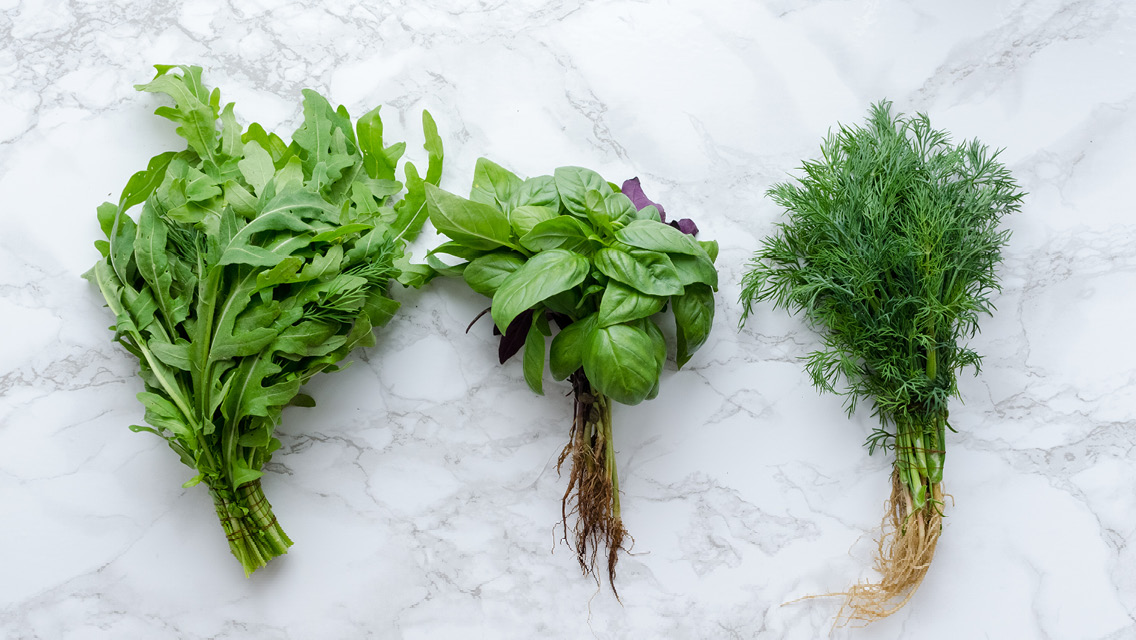
The dried herbs in your cabinet can spice up meals in a pinch. But nothing beats fresh herbs for enhancing the flavor and appearance of even the most mundane dishes. They also reduce the need for added salt and fat — and offer vital nutrients.
Food Basics
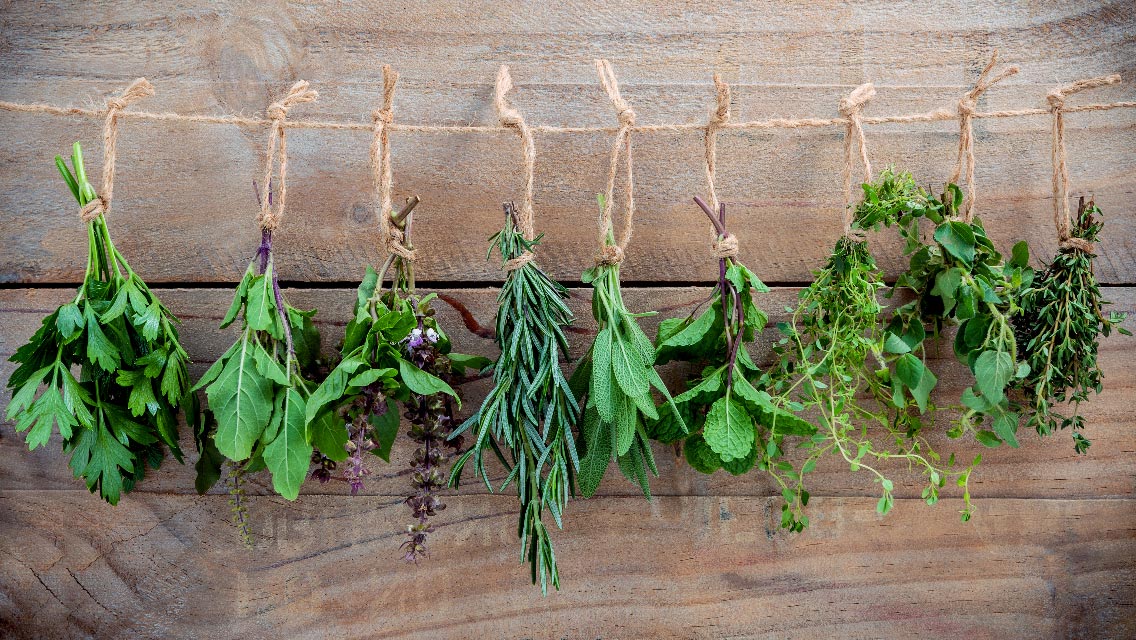
Most herbs available in the United States are the fragrant leaves of plants from either the mint or the carrot family. Their strong flavor comes from essential oils that are a plant’s first line of defense against predators.
Mint-family herbs (like basil, oregano, rosemary, sage and thyme) carry pungent oils on their leaves. Carrot-family herbs (including cilantro, dill and parsley) store their aromatic oils in canals within the leaf. Look for herbs that are deep green and crisp, and free of dark spots, yellowing and signs of wilting.
Nutritional Know-How
Both dried and fresh herbs provide vitamins, phytonutrients and antioxidants that promote cardiovascular health, reduce inflammation and prevent cancer. But fresh herbs are almost always tastier and more nutritious (the drying process reduces flavor and nutrients).
Basil is a good source of vitamin A and magnesium, which can improve cardiovascular health. It also contains flavonoids — plant compounds that act as powerful antioxidants, which inhibit the production of cancer-causing free radicals in the body. Oregano delivers more healthful antioxidants than any other herb; 1 tablespoon provides as much antioxidant punch as an apple. The oils in parsley combat tumor formation in the lungs, and its high levels of vitamins A and C bolster the immune system and help combat diseases including atherosclerosis, diabetes and asthma.
Eat Up!
Fresh herbs’ delicate flavors are lost when cooked for long periods, so it’s best to use them raw or add them near the end of cooking time. When substituting fresh herbs for dried, use 3 teaspoons of fresh for every 1 teaspoon dried.
- Avoid combining equal portions of strong herbs because their flavors will compete. Instead, reduce one of the herbs by half so it complements the other and elevates it as a main flavor.
- Fresh basil complements tomatoes, garlic, olive oil, nuts, vinegars, squash, peppers, eggplant, mushrooms and poultry. Its flavor is best when cut into thin strips. Stack the leaves and roll tightly, then cut the roll into thin strips using a sharp knife or gently tear by hand.
- Fresh oregano adds a dynamic dimension to chicken, lamb, peppers, tomatoes, mushrooms, egg dishes, salad dressings, olive oil and breads. To prepare, wash, pat dry with a paper towel, strip from stems and chop into small pieces.
Kitchen Tricks
- Pick up fresh herbs close to the time you plan to use them, and wash only prior to using to prevent wilting.
- Loosely wrap fresh herbs in paper towels and place in plastic bags pierced with holes in the crisper drawer of the refrigerator.
- Use potted herb plants as edible decorations in your kitchen. The plants will provide convenient opportunities to add delicious flavors to your favorite dishes.
- Freezing excess herbs for later use is a more nutritious alternative to drying. Wash, pat dry, wrap loosely in freezer wrap and freeze in plastic bags. Or chop herbs into small pieces, place in ice cube trays, fill with filtered water and freeze. Add frozen herb cubes directly to sauces, soups or vegetables.
Parsley Walnut Pesto
This pesto will add great fresh flavor when spread on a flatbread, pizza or a sandwich, or when drizzled on salad, grilled chicken or fish.
Makes two cups
- 2 cups fresh flat-leaf parsley leaves
- 1/2 cup toasted chopped walnuts
- 1/4 cup grated Parmesan cheese
- 2 garlic cloves, crushed
- 1/2 tsp. sea salt
- 1 cup extra-virgin olive oil
- 1 tbs. fresh lemon juice
- 1 tsp. lemon zest
Directions
- In a blender or food processor, combine the parsley, walnuts, Parmesan, garlic and salt. Blend until finely chopped.
- Slowly drizzle the olive oil into the blender through the hole in the lid. Add the lemon juice and zest and blend until mixture is smooth and thick. Add salt and pepper as needed.
- Place in food storage container, cover and refrigerate for up to five days.
Find Herb Crusted Salmon
Makes four servings
Fine Herb Mix (makes 1/2 cup)
- 2 tbs. finely chopped fresh parsley
- 2 tbs. finely chopped fresh tarragon
- 2 tbs. finely chopped fresh chives
- 2 tbs. finely chopped fresh chervil
For the Salmon
- 4 (4 ounce) portions wild salmon
- Extra-virgin olive oil in spray bottle
- 3 tbs. chopped fine herb mix (see recipe above)
- 1/2 tsp. sea salt
- 1/4 tsp. freshly ground black pepper
- 1 tsp. extra-virgin olive oil
Directions for the Herbs
- Combine fresh herbs in small bowl.
- Store in airtight container in refrigerator for up to two days.
Directions for the Salmon
- Preheat oven to 350 degrees F.
- Lightly spray the salmon with olive oil on each side. Sprinkle the fresh chopped herbs on each side of the fillets; press them on with your hand.
- Heat an ovenproof nonstick skillet with 1 teaspoon olive oil over medium-high heat.
- Add the salmon and sear for one minute until brown.
- Turn over and place in the 350-degree oven and cook another five minutes to medium.
- Heat in oven additional minutes if you prefer your salmon medium-well to cooked throughout.
This article has been updated. This article originally appeared as “Fresh Herbs” in the July/August 2008 issue of Experience Life.
This Post Has 0 Comments