




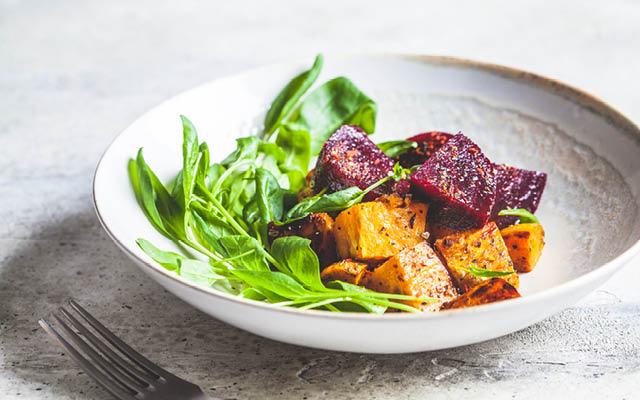
Until recently, beets were regarded mostly as cellar-stored root vegetables to put up in jars and then dust off come winter. But beets are delicious fresh out of the ground. Today we have access to a wide variety of beets – and their nutritious goodness – in an array of appealing colors, sizes and shapes.
Food Basics
The beet bulb is noted for its sweet and earthy flavor. It boasts the highest sugar content of any vegetable, yet remains low in calories. Red Ace is the most popular garden beet (sugar beets are a separate variety) in American markets, but other cultivars – like the Chioggia and Burpee’s Golden – are just as delicious.
Beets are grown in more than 30 states, harvested year-round, with peak season from June to October. Small- to medium-size beets (less than 21/2 inches in diameter) are most often used for cooking. Larger beets tend to be tougher, with unpalatable wooden cores.
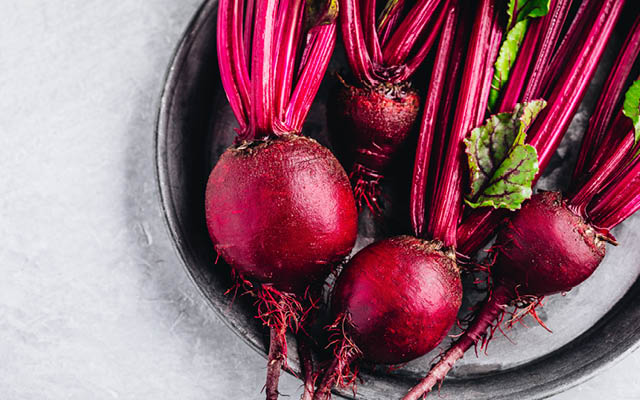
When buying, choose smooth, hard, round beets with surfaces free of cuts or bruises. Avoid beets with soft spots or shriveled skin. The taproot should be slender, and if the greens are attached, make sure they are crisp and bright, especially if you plan to eat them. If you choose bunched beets, select equal-size ones so they cook evenly.
Nutritional Know-How
Beets are one of nature’s most nutritious and healing foods. They are rich in the B vitamin folate (also called folic acid, an important nutrient for fetal development during pregnancy and for normal tissue growth), vitamin C, and dietary minerals like manganese, potassium, magnesium and iron. Betacyanin, the pigment that gives beets their rich color, helps guard against colon and stomach cancers. The antioxidants in beet fiber help to significantly reduce cholesterol, combat cardiovascular disease and protect against free-radical damage. Unlike other processed vegetables, canned beets offer taste and texture as good as fresh beets, but they lack the wallop of vitamin C and folate.
Eat Up!
Beets are delicious raw, roasted, boiled, steamed, juiced, pickled or canned. Their natural sugars become concentrated when cooked, but even when raw, their sweetness comes through. To maintain the bright color, don’t salt until after cooking.
- Grate peeled, raw beets to enhance cold salads and salsas. Beets taste great with arugula and apples. Also nice with goat cheese.
- Roast beets to retain maximum flavor and sweetness. Cook whole, unpeeled beets in moderate-heat oven (325 degrees F) until fork tender (about 15 to 20 minutes for small baby beets or 45 to 60 minutes for medium-size beets), cool slightly, and rub with paper towel to remove skin.
- To boil unpeeled beets, cover them with cold water. Bring them to a boil, and then reduce heat to a simmer. Cook until tender, about 45 to 60 minutes. Cool slightly, and, again, rub with paper towel to remove skin.
- Whether roasted or boiled, you can dice, slice or cut beets into julienne strips to serve with cooked meats, seafood, sharp dressings and grains. Try seasoning with sea salt and extra-virgin olive oil, or drizzle with some balsamic vinegar or orange juice.
Kitchen Tricks
- Remove greens from beets immediately to prevent moisture loss. Leave about 1 to 2 inches of stem to prevent nutrient loss through bleeding while cooking.
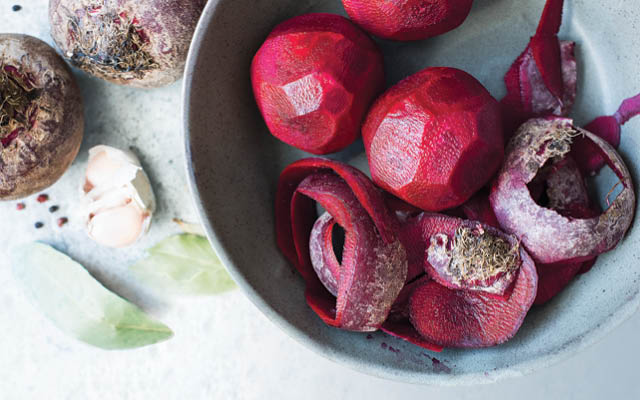
- Don’t peel beets until after cooking, since their nutrients and color easily drain away.
- Like many fresh vegetables, raw beets do not freeze well. Cooked beets, however, retain their flavor and texture in the freezer.
- Unwashed beets can be stored in the refrigerator crisper from two to four weeks.
Beet Couscous
Presented by Conscious Cuisine®
Makes 10 1/2-cup servings
- 1/4 tsp. extra-virgin olive oil
- 1/4 cup diced red onion
- 1 cup Israeli couscous
- 1/2 cup unsweetened apple juice
- 1 1/2 cups fresh beet juice (about 15 medium beets)
- 1/2 tsp. ground cinnamon
- 1/4 tsp. sea salt
- 1/8 tsp. white pepper
Directions
- Heat a medium saucepot over medium-high heat and add the olive oil to lightly coat the bottom of the pan. Stir in the onion and cook until it begins to soften, about two minutes.
- Add the couscous, apple juice, beet juice and seasonings. Mix well and bring to a boil. Reduce the heat to a low simmer and cover the pot. Steam until the liquid is absorbed and the couscous is bright red, 30 to 35 minutes.
Per serving (1/2 cup): Calories 180; Protein 6 g; Total Fat 0 g; Saturated Fat 0 g; Carbohydrates 38 g; Dietary Fiber 2 g; Cholesterol 0 mg; Sodium 260 mg|
Beet, Cranberry and Jicama Relish
Presented by Conscious Cuisine®
Makes 3 cups
- 2 cups unsweetened apple juice
- 2 cups 1/2-inch cubes, peeled beets
- 1 cup diced jícama 1/2 cup dried cranberries
- 1/2 cup chopped walnuts
- Grated zest of one orange
- 1 tsp. ground cinnamon (or one cinnamon stick)
Directions
- In a medium saucepan, combine all the ingredients and mix well. Bring to a boil over medium-high heat. Reduce heat to low, and simmer uncovered until the beets are soft, about 45 minutes.
- Transfer to a bowl, cover and refrigerate for one hour before serving.
- Store in an airtight container in the refrigerator for four or five days.
Per serving (2 tbs.): Calories 40; Protein 1g; Total Fat 1.5 g; Saturated Fat 0.5 g; Carbohydrates 6 g; Dietary Fiber 1 g; Cholesterol 0 mg; Sodium 10 mg|
Beet Quinoa
Presented by Conscious Cuisine®
Makes five servings
- 1/4 tsp. extra-virgin olive oil
- 1 cup quinoa
- 1/2 cup chopped yellow onion
- 1/2 cup chopped zucchini
- 1/2 cup chopped celery
- 2 cups beet juice (about 10 medium beets)
- 1/2 tsp. ground cinnamon
- 1/4 tsp. sea salt
- 1/8 tsp. freshly ground black pepper
Directions
- Heat a saucepan over medium heat. Add the quinoa and toast the grains for about three minutes. Stir the quinoa constantly, until it turns light brown and smells nutty.
- Remove the quinoa from the pan, and return the pan to the stovetop. Add the olive oil to lightly coat the bottom of the pan.
- Add the onions, zucchini and celery. Cook until the onion has just softened, about two minutes.
- Stir in the toasted quinoa, nutmeg, salt and pepper.
- Add the beet juice, and bring to a low boil. Reduce heat to low, cover, and simmer for 25 to 30 minutes, or until the quinoa has absorbed the beet juice and is fluffy.
Per serving (1/2 cup): Calories 160; Protein 6 g; Total Fat 2.5 g; Saturated Fat 0 g; Carbohydrates 30 g; Dietary Fiber 3 g; Cholesterol 0 mg; Sodium 180 mg
This article has been updated. It was originally published online on June 1, 2007.
This Post Has 0 Comments