




ARTICLE SHORTCUTS
The Players | The Process | How Do You Know If You’re Low? | 8 Ways to Boost Glutathione | How Glutathione Protects the Brain
If biochemistry were the stuff of comic books, antioxidants would be superheroes — with glutathione saving the day.
Though few people recognize its importance, glutathione (gloota-THIGH-own) is the most powerful antioxidant in our bodies. This obscure defender of good health works around the clock to fend off nefarious toxins and diseases.
Experts are just now beginning to understand glutathione’s powerful role in the body. They are seeing the connections, for example, between depleted stores of this antioxidant and the likelihood of chronic disease.
And along with increased attention, glutathione is getting newfound respect. “It’s one of the most important compounds in the body for staying healthy,” says Joel Evans, MD, a member of the core faculty at the Institute for Functional Medicine and founder and director of the Center for Women’s Health in Stamford, Conn.
That’s because glutathione is a triple threat to toxins: It neutralizes free radicals, enhances the immune system, and detoxifies the liver.
Glutathione neutralizes free radicals, enhances the immune system, and detoxifies the liver.
But some experts worry that glutathione has met its match. Modern life — with refined foods, over-the-counter painkillers, obesity, and sky-high stress levels — robs our bodies of this vital antioxidant.
“If glutathione levels are low, that’s both a reflection of ill health and a cause of ill health,” warns Evans.
Even if you’re doing everything right, aging works against you. Around age 45, our glutathione levels start slipping; they can fall as much as 50 percent below optimal as we age.
But as the comic books say, fear not. There are many steps you can take to restore this antioxidant superhero. And when you do, your immune system will thank you.
How Glutathione Works: The Players
Superhero: Glutathione
Found in every cell in our bodies, glutathione protects our cells’ energy-producing factories — the mitochondria — from bacteria, viruses, and toxins. Most antioxidants have a short lifespan, sacrificing themselves whenever they wipe out a free radical.
Glutathione is different: It carries enough zip to not only recharge itself but also to resuscitate other spent antioxidants, including vitamins C and E, explains Leslie Fuller, ND, associate dean at the National College of Natural Medicine in Portland, Ore.
Most glutathione is made inside the body from three amino acids: glutamic acid, cysteine, and glycine. Under healthy conditions, our bodies are able to churn out plenty of glutathione to meet our daily needs. But processed foods, caffeine, alcohol, cigarettes, some medications, stress, and environmental toxins deplete the body’s stash.
Archvillain: Free Radicals
Like all superheroes, glutathione has a nemesis — namely, free radicals. These unstable oxygen molecules are missing an electron, so they rip electrons from their neighbors, creating more free radicals. This snowball effect can disrupt a cell’s integrity, causing it to behave abnormally.
Under healthy conditions, the body will repair or destroy the cell. Unfortunately, though, our bodies must contend with an ever-growing onslaught of free radicals that hitchhike into the body on the backs of chemicals in the air, water supply, and food chain.
The cumulative load is called oxidative stress. “Almost every chronic illness known to humankind has been linked in some measure to free-radical-induced tissue damage,” says Lise Alschuler, ND, FABNO, coauthor of The Definitive Guide to Cancer.
The Process
1. Toxic Attack
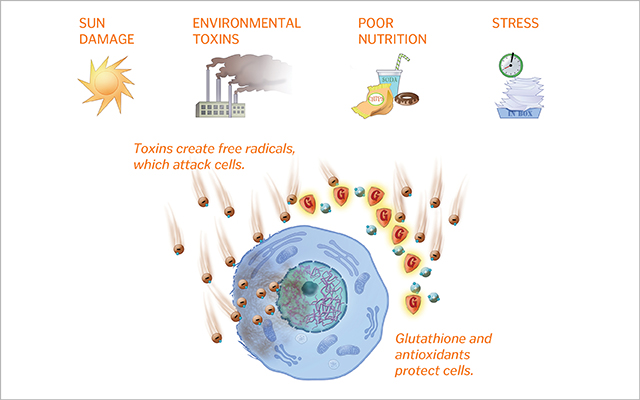
Every breath we take, every calorie we burn, every muscle we use leaves a wisp of free radicals in its wake. They are a natural byproduct of our bodies’ cellular processes. But when bombarded with toxins and free-radical damage from the sun, pollution, poor nutrition, or chronic stress, our bodies can’t keep up. “We are in a situation where our manufacturing and our recycling of glutathione is maxed out,” says neurologist and functional-medicine doctor David Perlmutter, MD, FACN, ABIHM, author of Grain Brain. “We just can’t detoxify fast enough.”
 Illustrations by Fran Milner
2. Free-Radical Neutralization
Glutathione neutralizes free radicals — and at the same time bolsters the immune system and detoxifies our livers.
3. Antioxidant Reactivation
Glutathione works in tandem with other antioxidants to battle free radicals, but functions as more than just a good teammate. The so-called mother of all antioxidants, it also helps recharge fellow fighters, including vitamins C and E. This recharging superpower makes glutathione extra important in the body’s fight against oxidization.
4. Detoxification
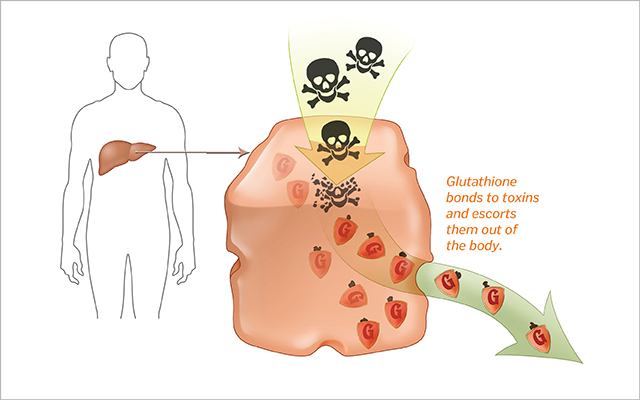
Found throughout our bodies, glutathione is concentrated in our livers. The body’s primary detox organ, the liver stores nutrients and filters out toxins. But expelling a toxin isn’t easy. Liver enzymes must first convert the toxin into a compound that can be flushed. Then, glutathione grabs hold of the toxin and drags it out of our bodies via our stool or urine.
 Illustrations by Fran Milner
How Do You Know If You’re Low?
Most doctors don’t routinely test glutathione levels, but Evans suggests it for all his patients: “It’s good to have a baseline, even if you are not sick,” he explains. A simple blood test can tell you whether your glutathione is low; he uses the Genova Diagnostics test. “Any licensed healthcare provider can order it,” he says.
Whether or not you choose to confirm your glutathione levels, it’s a safe bet to assume that you’ll benefit from boosting them — especially if you’re not feeling your best, says Evans.
In truth, most of us could probably use a boost. The average American consumes only 35 milligrams of glutathione per day, says Alschuler, far short of the optimal daily intake of 250 milligrams. “This, coupled with decreasing glutathione production as we age, leaves most of us deficient.”
The average American consumes only 35 milligrams of glutathione per day, when the daily intake is 250 milligrams.
Some scientists wonder whether low glutathione levels are at least partly to blame for the free-radical-induced illnesses so common beyond middle age, such as Alzheimer’s, cancer, and heart disease. Indeed, research published in the New England Journal of Medicine found that among people with heart disease, those with the least amount of glutathione in their blood were 30 percent more likely to have a heart attack than those with the most glutathione.
Given that high stress levels, past infections, poor diet, excess weight, and exposure to toxins can all nibble away at your body’s glutathione stash, it makes sense to do whatever you can to increase your levels.
The good news: Safeguarding your glutathione levels is fairly straightforward, says Perlmutter (see “8 Ways to Boost Glutathione” below), and “the health implications can be profound.”
8 Ways to Boost Glutathione
Even superheroes need a helping hand. Here’s advice from functional-medicine pioneer Mark Hyman, MD, on how you can aid glutathione in its ongoing fight to keep you healthy.
1. Switch On Your Genes: Roughly half of Americans are missing one or more of the genes necessary to produce enough glutathione, says Mark Hyman, MD, director of the Cleveland Clinic’s Center for Functional Medicine. To make the most of the genes you do have, follow the tips here, and maximize your intake of green tea, fish oil, and blueberries, which are rich in compounds known to activate glutathione-producing genes.
2. Limit Toxic Exposure: Minimizing your toxic burden will help safeguard your body’s ability to produce glutathione, while also reducing excess demand on your glutathione supplies. Eat organic produce, grassfed meat, and wild-caught fish; filter your water; reduce alcohol intake; cut down on processed foods and low-quality calories; and avoid chemical-laden personal-care and home-cleaning products.
3. Seek Out Glutathione-Rich Produce: Avocado, asparagus, spinach, squash, melons, grapefruit, and peaches are high in a plant version of glutathione that the body converts to replenish its supply. Whenever possible, eat these foods raw or minimally heated, since heating and microwaving tend to destroy antioxidants.
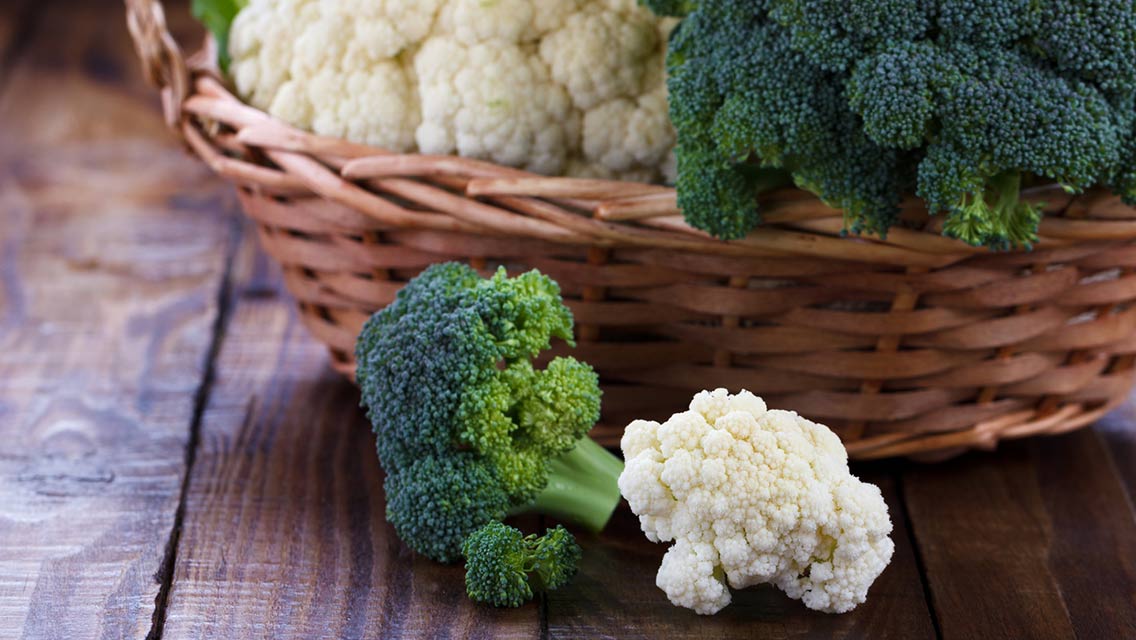
4. Eat More Cruciferous Vegetables: Broccoli, cauliflower, and cabbage contain cyanohydroxybutene, a chemical compound that helps increase the body’s glutathione levels. They also powerfully aid the liver in its detox duties by trapping toxins and escorting them out of the body.
5. Consume Foods Rich in Proteins and Amino Acids: Glutathione is made of protein-building amino acids, and your body needs these raw materials to make more of the antioxidant. Eggs and whey protein are especially good sources. If you buy whey protein, make sure it is made from nondenatured proteins and is bioactive, meaning the cysteine is more bioavailable. Eggs and whey are also rich in sulfur, which gives glutathione much of its detoxifying prowess. “Sulfur is a sticky, smelly molecule that acts like flypaper trapping toxins in the body,” explains Hyman. Aromatic veggies (like onions and garlic) and cruciferous vegetables (see No. 4) are also high in sulfur.
6. Consider Supplements: Glutathione is available in supplement form (generally labeled as GSH), but its efficacy is considered iffy by many experts: Because it’s a large tripeptide molecule, it isn’t absorbed through the intestines like other vitamins or minerals. Certain supplements can aid your body in maximizing its own glutathione levels, however. The antioxidant alpha-lipoic acid (ALA) can vanquish free radicals throughout the body. It’s available in supplement form, and also in organ meats (such as liver) and brewer’s yeast. N-acetylcysteine (NAC) works to restock the liver’s supply of glutathione. Selenium (a mineral found in supplement form, as well as in Brazil nuts, red meat, and seafood) increases the body’s ability to recycle glutathione.
7. Get Your Supporting Antioxidants: The more antioxidants you’ve got on board — particularly vitamins C and E — the less your body needs to rely purely on its glutathione reserves. Vitamin C is glutathione’s chief crime-fighting cohort: The two antioxidants work in tandem to rid the body of water-soluble toxins. Strawberries, bell peppers, and mangoes are high in vitamin C. And in studies, people with high levels of vitamin C typically have high glutathione levels, as well. Spinach, kale, broccoli, sunflower seeds, and nuts like almonds and hazelnuts — and even peanut butter — are packed with vitamin E.
8. Be Active: Aerobic exercise, strength training, and yoga all help build glutathione levels — as well as boost your immune system and support detoxification. If you’re not currently exercising, Hyman recommends starting slow and building up to 30 minutes a day of vigorous aerobic exercise like walking, running, or others sports. Resistance training for 20 minutes three times a week is also ideal. While exercise does produce free radicals, thereby adding to your body’s oxidative stress, the glutathione-boosting benefits of most fitness-building activities typically even the score.
How Glutathione Protects the Brain
Our brains make up only 2 percent of our bodies’ weight but use roughly 20 percent of our oxygen. Because the body spews free radicals when it uses oxygen, the brain is awash in rogue molecules. Glutathione helps protect the brain against their ravaging effects.
Uncontrolled free-radical damage is a key cause in diseases affecting the brain, including schizophrenia and Alzheimer’s. Evidence suggests that a shortage of glutathione is a main factor, and research into Parkinson’s disease is telling.
Our brains make up only 2 percent of our bodies’ weight but use roughly 20 percent of our oxygen.
Parkinson’s corrupts the parts of the brain that make dopamine, a chemical instrumental in coordinating the body’s movements. When researchers looked at the brains of people with Parkinson’s, they discovered that the area that makes dopamine, the substantia nigra, contained as much as 40 percent less glutathione than the rest of the organ. “So, here’s an area that’s being damaged by free radicals, that’s low in glutathione, and therefore is at more risk for free-radical damage,” says Perlmutter.
While much about Parkinson’s disease remains a mystery, Perlmutter sees glutathione as a vital treatment option. “We are all about getting as much glutathione to the brain as possible,” he says. “It really is one of the most protective agents around.”
This article originally appeared as “Glutathione: The Great Protector” in the May 2015 issue of Experience Life.

This Post Has 3 Comments
[…] Link four […]
Useful and informative article. I’m post-Covid and am using gluthiathone to help recovery. I wish I’d read this article when I was in Covid, but better late than never.
I am trying to get some energy back after having Covid a couple months ago. Did you find glutathione helped?