




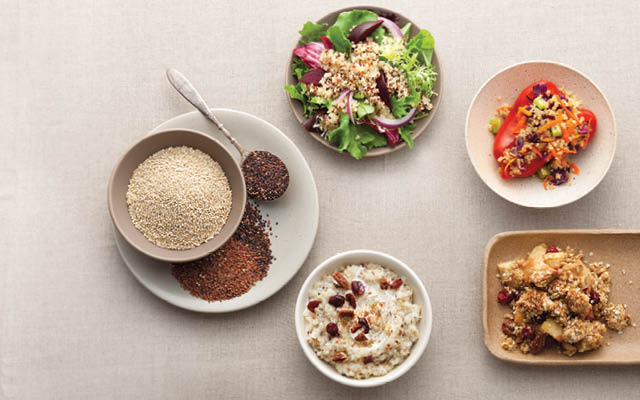
Call it the seed that eats like a grain. Quinoa, virtually unheard of five years ago, has recently achieved cultlike status among foodies and health-seekers who have had their fill of conventional grains like wheat, rice and barley.
A complete protein that contains a trove of other important nutrients, quinoa (pronounced KEEN-wah) is now being touted as the supergrain of the future. That’s funny, because it was a staple for the ancient Incas of South America, where most of the world’s quinoa crops are still grown. In fact, the sudden popularity of quinoa in the United States and elsewhere has driven up its price, making it unaffordable for many of the people who grow it for a living (a good reason to consider buying fair-trade quinoa).
Many Americans still haven’t been exposed to this mild-flavored, gluten-free superfood, and even fewer have made it a staple in their kitchens. That’s apt to change as word of the seed spreads, since it’s easy to prepare and versatile enough to improvise with. Read on and learn how to incorporate quinoa into your cooking repertoire — and into your high-vitality eating plan.
Quick and Easy: Tips for Enjoying Quinoa
- Keep cooked quinoa on hand to sprinkle over salad greens.
- Create a tasty pilaf with quinoa, spices, nuts and beans — then stuff it into your favorite vegetables, such as tomatoes, bell peppers or zucchini.
- Tweak your favorite fruit-crisp recipe by using quinoa flakes instead of rolled oats for the topping.
- Cook whole quinoa as you would cook steel-cut oatmeal. Top with dried fruits, nuts, cinnamon, and a drizzle of maple syrup or cream.
Shades of Goodness
Called an “ancient grain” — like teff, buckwheat and amaranth — quinoa is the seed of the chenopodium plant, a relative of Swiss chard, spinach and beets. There are more than 120 species of quinoa, but only three main varieties are cultivated: gold, red and black. Which one should you buy? Depends on how you want to use it.
Gold — Fluffy, light and creamy, gold quinoa is the most common variety. Enjoy it as a substitute for rice, a breakfast cereal, in baked goods, and in cold or warm salads.
Red — Because of its slightly bitter taste, gorgeous red quinoa pairs well with mild, creamy foods like squash, avocado and soft cheeses. Red quinoa is also crunchier than gold, so it can be used as a substitute for chopped nuts.
Black — Black quinoa’s dramatic appearance belies a subtly sweet flavor and nutty texture. Crunchier than red quinoa, it stands up well to long baking times and pairs well with citrus and other fruits.
Kitchen Tricks
- Lightly rinse quinoa before cooking by placing it in a fine strainer and swishing briefly but thoroughly with cold water. This removes natural chemical compounds called saponins, which create a bitter coating on the grain. (Avoid soaking quinoa since it can deposit saponins within the seed.)
- To cook, combine a ratio of one-and-a-half to two parts cooking liquid to one part rinsed quinoa. Bring to a boil, and then turn the heat to low and put a lid on the pot. Simmer until grains are translucent. Quinoa cooks in about 15 minutes. You’ll know it’s finished when you see that the outer germ around each kernel has twisted outward to form a little white, spiral tail. The tail remains slightly crunchy while the kernel itself becomes soft and springy.
- For a robust nutty flavor, toast quinoa in a dry skillet, stirring often, for about five minutes before adding cooking liquid.
Shopping and Storage Tips
- Gold quinoa is available in different forms — as whole seeds, flakes and flour. Red and black varieties are generally sold as whole seeds. Keep in mind that flakes and flours have a higher glycemic index and digest more quickly.
- Because quinoa contains delicate fatty acids, it can go rancid fairly quickly. To keep it fresh, store uncooked quinoa in an airtight container for up to three months (up to six months in the fridge or freezer). Cooked quinoa can be stored in the refrigerator for a few days or frozen for up to a month.
Quinoa Recipes
Basic Quinoa
- 1 clove garlic, smashed
- 1/4 tsp. sea salt, divided
- 1 3/4 cups water
- 1 cup white quinoa, rinsed and drained
Directions
- Place the garlic, 1/4 teaspoon salt, and water in a saucepan and bring to a boil over high heat.
- Stir in the quinoa, decrease the heat to low, and cover. Simmer for 15 to 20 minutes, until all the water is absorbed.
- Transfer cooked quinoa to a large bowl and discard the garlic.
- Allow to cool to room temperature.
Sweet Potato and Quinoa Cakes With Black Beans
Topped with salsa and sour cream, these addictive croquettes make a warm, nourishing meal. Serve with a fresh green salad.
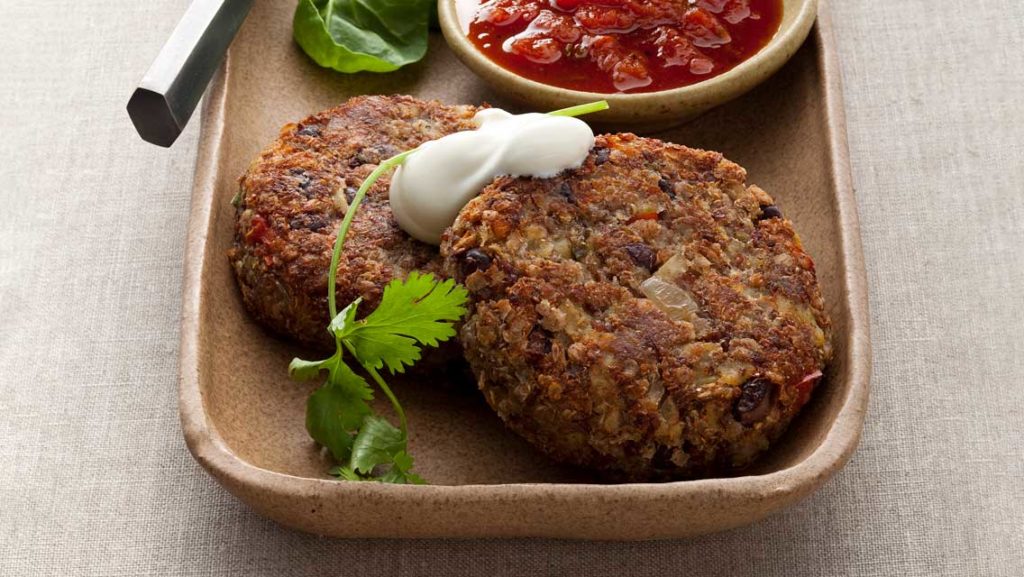
Makes | six servings (18 croquettes total)
Ingredients
- 1 tbs. coconut oil, plus 2 tbs. reserved for frying croquettes
- 1 medium sweet potato, peeled, grated and rinsed in cold water, and patted dry
- 1/2 cup minced red bell pepper
- 1 jalapeño pepper, minced
- 1 cup minced yellow onion
- 2 tsp. whole cumin seeds
- 1 tbs. ground coriander
- 1/2 tsp. salt
- 1 can black beans, rinsed and drained
- 1 cup red quinoa, cooked
- Salsa and sour cream for serving
Directions
- Heat 1 tablespoon coconut oil in a large skillet and sauté the grated sweet potato, red bell pepper, jalapeño pepper and yellow onion for about three to five minutes. Add the cumin and coriander.
- Continue to sauté vegetables until they are just cooked. Season with salt.
- Add the black beans and cooked quinoa, then blend a third of this mixture in a food processor until smooth.
- Stir the blended mixture back into the remaining vegetables in the skillet.
- Shape 1/4 cup of the mixture at a time into patties about 1/2-inch thick and 2 inches across.
- Heat the reserved coconut oil in a heavy skillet over medium heat and pan-fry the croquettes for about two minutes on each side.
- Keep croquettes warm in the oven until all are ready to serve.
Winter Salad
Served over supergreens like baby kale, spinach and beet greens, this hearty salad makes a fresh and flavorful meal. Try dried cherries, blueberries or diced dried apricots in place of the cranberries; substitute toasted pecans, almonds or walnuts for the pumpkin seeds.
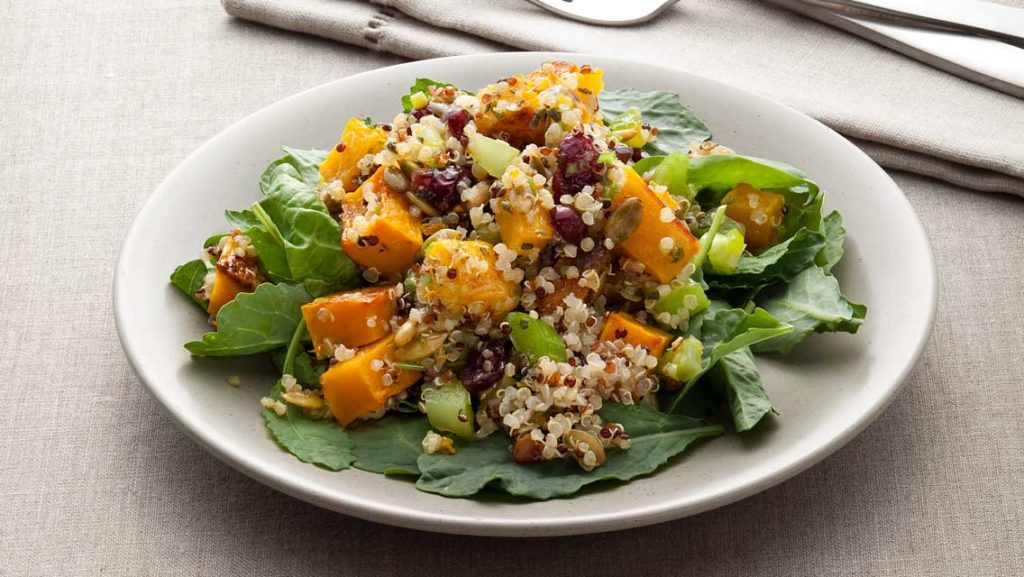
Makes | four servings
- 1 cup multicolored quinoa, cooked
- 2 cups roasted squash cubes
- 2 stalks celery, chopped
- 3 green onions, minced
- 1/2 cup toasted pumpkin seeds
- 1/2 cup dried cranberries
- 1 tbs. fresh sage, minced (or 1 tsp. dried)
- Zest and juice of one orange
- 1/4 cup extra-virgin olive oil
- Salt and freshly ground black pepper to taste
Directions
- Let quinoa cool to room temperature, then toss all ingredients together in a large bowl.
- Adjust the seasonings to taste.
Moroccan Chicken Stew
At once comforting and exotic, this homey chicken stew is deepened by curry and cinnamon notes. For the pilaf, try toasted almonds, parsley and diced dried apricots instead of toasted pine nuts, mint and currants.
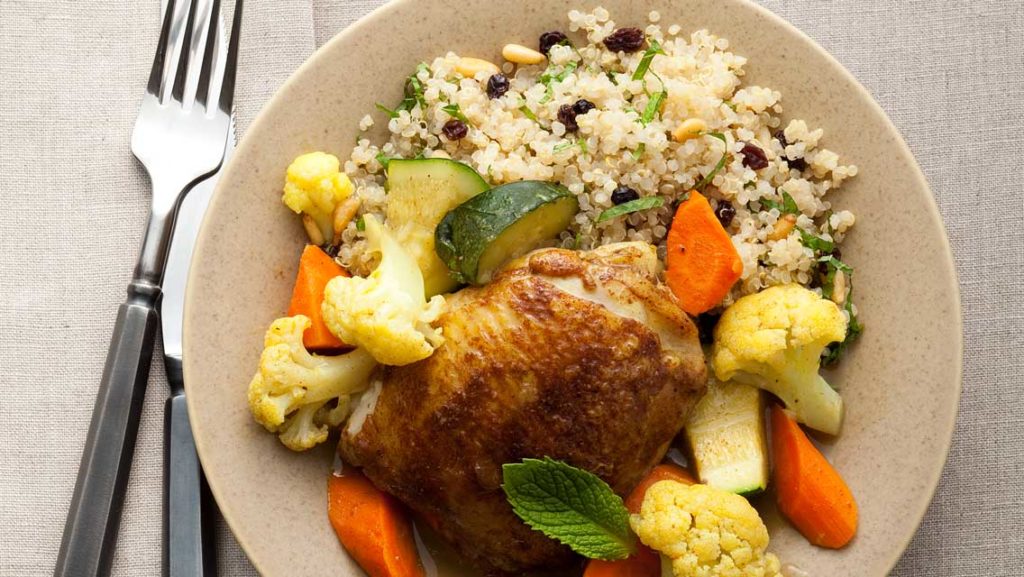
Makes | four servings
Ingredients
- 1 tbs. olive oil
- 4 bone-in, skin-on chicken thighs
- 1 1/2 tsp. curry powder
- 1/2 tsp. cinnamon
- 1/2 yellow onion, diced (about 1 cup)
- 3 carrots, peeled and cut into chunks
- 1/2 head cauliflower, cut into florets (about 2 1/2 cups)
- 2 zucchini, cut into chunks (about 2 1/2 cups)
- 1 1/2 cups chicken stock
- Salt and freshly ground black pepper to taste
- 2 cups cooked quinoa
- 1/2 cup toasted pine nuts
- 1/4 cup chopped fresh mint
- 1/4 cup dried currants
Directions
- Heat olive oil in a large Dutch oven over medium heat and sear the chicken thighs about three to five minutes on each side. Remove chicken from the pan, cover and keep warm.
- Add the spices and vegetables to the pot, and cook until vegetables are beginning to get tender. Return the chicken thighs to the pot, add the chicken stock and cover. Simmer over low heat for about 30 minutes, until chicken and vegetables are tender.
- Season with salt and pepper to taste.
- Transform the quinoa into a pilaf by stirring in the toasted pine nuts, mint and currants, then salt and pepper to taste. Serve chicken stew over warmed quinoa pilaf.
Cabbage Rolls Filled With Quinoa and Ground Beef
For a vegetarian version of this hearty entrée, substitute crumbled tempeh for the ground beef.
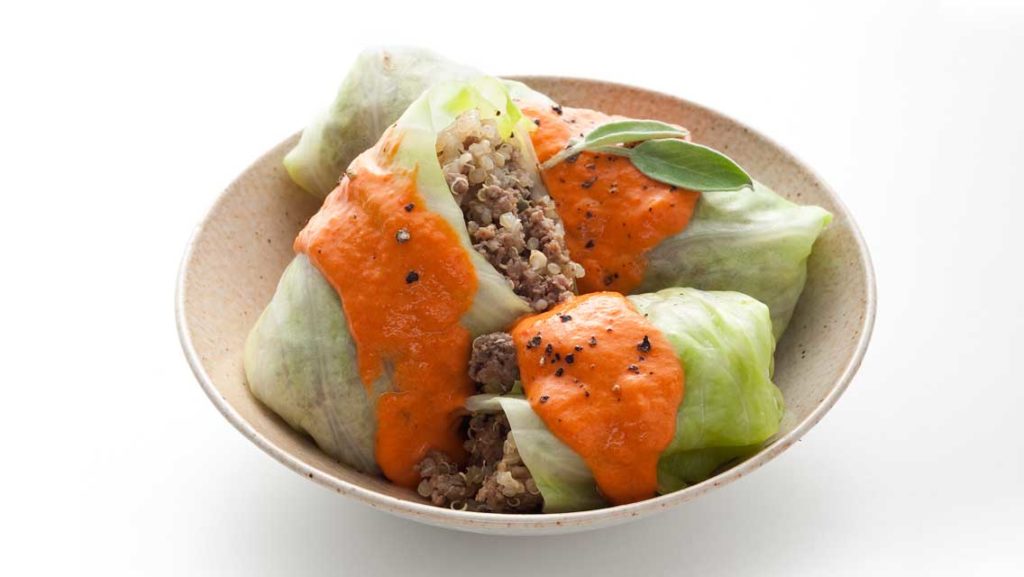
Makes | four servings
Ingredients
- 1 head cabbage, core removed
- 1 tbs. olive oil
- 1/2 pound grass-fed ground beef
- 1 yellow onion, minced
- 2 cloves garlic, minced
- 2 stalks celery, minced
- 1 cup chopped mushrooms
- 1 cup quinoa, cooked
- 1 tsp. dried sage
- 1/2 tsp. dried thyme
- Salt and freshly ground pepper to taste
- 2 red bell peppers, roasted or broiled to char the skin
- 1/2 cup sour cream
Directions
- Fill a medium stockpot with 1 to 2 inches of water and bring to a simmer. Put the head of cabbage, cored side down, in the water and cover. Simmer for eight to 10 minutes, until the leaves are softened and can be easily pulled off the head of cabbage. Remove from water and cool while you prepare the filling.
- Heat the olive oil in a sauté pan and cook ground beef with the onions, garlic, celery and mushrooms until the meat is thoroughly cooked and the vegetables are softened. Add the quinoa, sage and thyme, then season with salt and pepper.
- When the cabbage is cool enough to handle, gently remove eight whole leaves, fill each one with 1/2 cup of quinoa mixture and roll burrito-style. Arrange cabbage rolls in a 9- by 9-inch baking dish and cover with aluminum foil. Bake for about 20 to 25 minutes in a 350-degree F oven, or until cabbage rolls are heated through.
- Blend the roasted peppers with the sour cream and warm gently in a saucepan. Serve over the cabbage rolls.
Quinoa Convenience
After 10 years of working in farmers’ markets, Chef Nathan Lyon knows the joys of fresh food. He also knows that if a food is versatile, people will never tire of it. Which is one reason Lyon gets excited about quinoa. “It’s so adaptable,” he says. “You can eat it for breakfast, lunch or dinner, depending on the preparation — and it takes on different flavors really well.”
Lyon, who is the author of Great Food Starts Fresh, host of the television show Good Food America (Veria Living) and co-host of Growing a Greener World (PBS), talked with Experience Life about the joys of quinoa and his favorite ways to prepare it.
Why is quinoa becoming so popular?
I think people get excited about quinoa when they realize how easy it is to prepare. Convenience is one of the things this country embraces. Plus, quinoa has a firm texture with a slight crunch and a very nice earthy, nutty flavor. On top of all that is the nutrition. Quinoa is gluten-free and it’s a complete protein, a major bonus for those who don’t eat a lot of animal foods.
What’s a typical rookie mistake with quinoa?
It’s pretty user-friendly, but people have a tendency to overcook it. When you overcook quinoa, it loses the wonderful crunchiness that is part of its appeal.
What are some great, simple ways to eat quinoa?
Salads. You can make a warm, yummy kale-quinoa salad by cooking quinoa and mixing it with toasted walnuts, potatoes and kale cooked with curry powder, onions and garlic. I also like quinoa, corn and black bean salad dressed with lemon, cumin and olive oil. Or quinoa with grilled vegetables with that same dressing.
Any favorite recipes?
My Spicy Lemon Quinoa Salad in Great Food Starts Fresh is super simple. Open a can of garbanzo beans while the quinoa is cooking. Rinse and drain the beans. Chop up some kalamata olives. Get out your feta cheese and toast some pine nuts. Make a quick lemon citronette with fresh lemon juice, chopped shallot and extra-virgin olive oil. When the quinoa is cooked, mix all the components together and add some crushed red pepper flakes. It’s fast and easy to make, and ridiculously refreshing and satiating.
What are some other savvy ways to prepare quinoa?
You can cook it in stock or broth instead of water to add richer flavor. You can also prepare quinoa like a rice pilaf with onions, garlic and olive oil — or do it risotto style. You can use it in sushi or as a base for chili. You can also make a really good quinoa tabouli, a Middle Eastern salad that traditionally uses bulgur wheat. For breakfast, you can make it into a cereal and mix it with dates, a little bit of yogurt and toasted almonds. Instead of steel-cut oats, which take 45 minutes, sub in quinoa, which cooks in just 15 minutes. It packs a lot of protein, has a lower glycemic index, and when compared with oatmeal, I think both the taste and texture are better.
All recipes were created by Betsy Nelson (a.k.a. “That Food Girl”), a Minneapolis-based food stylist and recipe developer.

This Post Has One Comment
Wow! What great insight about quinoa.
Thanks for the great recipes suggestions!
I love them all!