




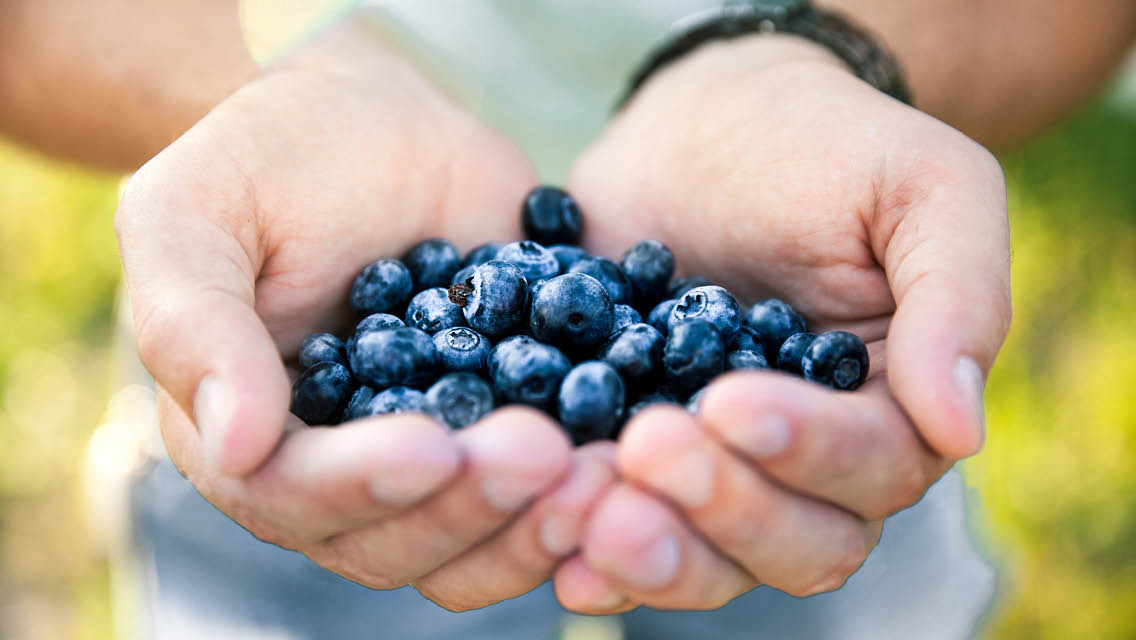
Blueberries are one of those healthy treats you never have to feel the least bit guilty about enjoying. As delicious by the handful as they are in salads, cereals, smoothies and sauces, they are at their seasonal best during the height of summer.
Food Basics
- Sweet and juicy with a spicy aroma, blueberries — a small, round fruit filled with tiny seeds — are native to North America.
- Eaten wild for thousands of years, they were first cultivated in the early 1900s. Today they can be purchased both cultivated and wild.
- Wild blueberries are smaller (less water content) than cultivated blueberries and have a more intense, tangy flavor.
- Blueberries are also sold dried and frozen — they contain only slightly fewer nutrients than raw blueberries.
- In season, though, fresh is best. When purchasing, look for firm berries with a light purple-blue color and a silvery frost. They should be dry and plump, not bruised, broken or moldy.
- If you gently turn the container over, the berries should move freely and the container should be dry inside.
Nutritional Know-How
- One cup of raw blueberries provides 36 percent of your recommended daily allowance of vitamin K, which is essential for healthy blood clotting and may support bone health.
- The manganese in blueberries also helps maintain healthy bone structure.
- The fruit is high in vitamin C, which absorbs iron, reduces free radicals, and helps the body repair and regenerate connective tissue — like skin, blood vessels and bone.
- Blueberries’ phenols and anthocyanins may help the body store and process glucose more effectively.
- The fruit’s dietary fiber —2 grams per half-cup serving — helps keep the digestive tract operating smoothly.
Eat Up!
- Toss fresh or frozen blueberries into your favorite herbal iced tea or sparkling water to add a great fruit flavor and lively color.
- Frozen blueberries mixed with yogurt, hemp milk or juice make a creamy smoothie. Use the berries alone or create your favorite blend with other berries or frozen banana pieces.
- Make a fresh blueberry sauce to drizzle on warm cereal. Combine 1 cup fresh blueberries, 1 teaspoon honey and 1 teaspoon lemon juice into a saucepan. Heat to soften berries. Pour into blender and process until smooth. Strain and refrigerate.
- Substitute unsweetened dried blueberries for raisins in breakfast cereal or trail mix. The unsweetened variety can be difficult to find in stores (most contain sugar), but can be ordered online.
Kitchen Tricks
- When storing fresh berries, keep them in a shallow container in the refrigerator and wash them only when you are ready to eat them.
- To wash, place berries in a colander and rinse with cold water, then pat dry with a towel.
- To save money, pick or buy fresh blueberries in summer when prices are lowest. To freeze, first wash blueberries in a colander and drain well. Then freeze in single layers on baking sheets for about an hour. Finally, place frozen berries in freezer bags. This method makes the berries easy to handle and allows you to accurately measure what you need per recipe.
Recipes
Blueberry Bisque
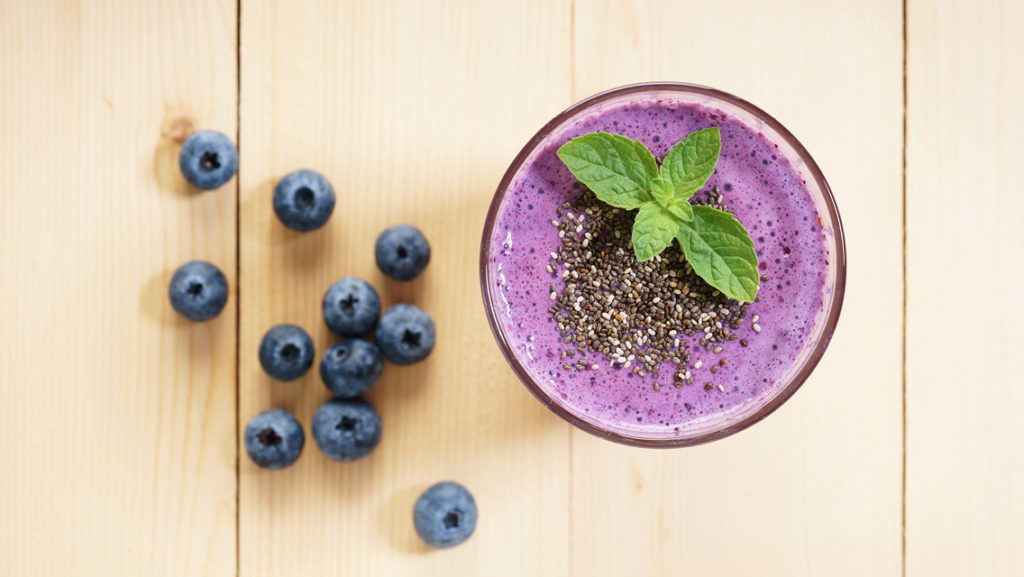
Makes six servings
Ingredients
- 4 cups fresh blueberries
- 2 cups apple juice
- 1/2 cup plain yogurt
- 1 tablespoon mint chiffonade
Directions
- Place the berries, juice and yogurt in a blender and purée until smooth.
- Fold in thinly sliced mint leaves and serve.
Per serving (1 cup): Calories 110; protein 3g; total fat 1g; saturated fat 0g; carbohydrates 26g; dietary fiber 3g; cholesterol 0mg; sodium 25mg|
Blueberry-Buckwheat Griddle Cakes
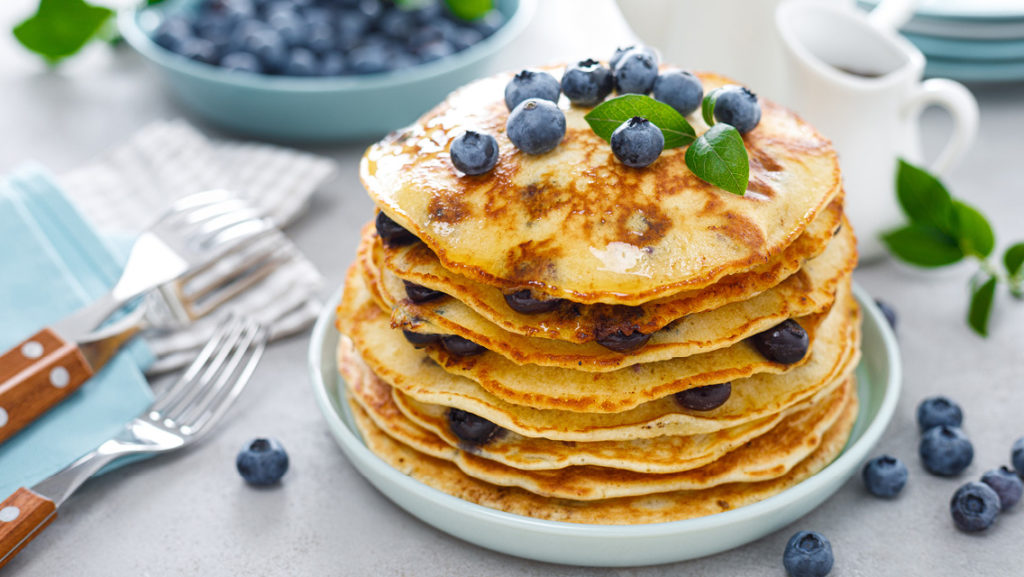
Makes six servings
Ingredients
- 1/2 cup dried blueberries
- 1/8 tsp. ground cinnamon
- 1 tbs. unsweetened apple juice
- 1/4 cup buckwheat flour
- 1/4 cup whole-wheat pastry flour
- 3/4 tsp. baking powder
- 1/8 tsp. sea salt
- 2 eggs separated
- 1 tbs. canola oil
- 1 tbs. honey
- 3/4 cup milk
Directions
- Heat a medium saucepan over medium heat and add the blueberries, cinnamon and apple juice. Cook until the blueberries have plumped, four to six minutes.
- Place the blueberries in a bowl and refrigerate to cool down. Into a medium mixing bowl, sift the flours, baking powder and salt.
- In a separate bowl, mix together the egg yolks, oil, honey and milk. Make a well in the center of the dry ingredients and stir in the egg mixture. Mix just until moistened.
- In a separate bowl, whip the egg whites until stiff peaks form. Gently fold the egg whites into the batter. Fold in the chilled blueberries.
- Heat a griddle over medium heat and coat with oil in spritzer bottle.
- Spoon the batter by 1/4 cupfuls onto griddle. Cook until bubbles appear and edges begin to look dry. Turn pancakes over; they will rise and the middles will become light and fluffy. The bottoms should be golden brown.
- Remove from heat and serve.
- To freeze griddle cakes: Make cakes according to recipe, cool on baking rack. Place in single layer in food storage container or large freezer bags separating layers with parchment paper. Reheat frozen grilled cakes in toaster oven.
Per serving (two pancakes): Calories 180; protein 5g; total fat 6g; saturated fat 1.5g; carbohydrate 29g; dietary fiber 2g; cholesterol 75mg; sodium 270mg|
Salad of Mixed Greens With Blueberries
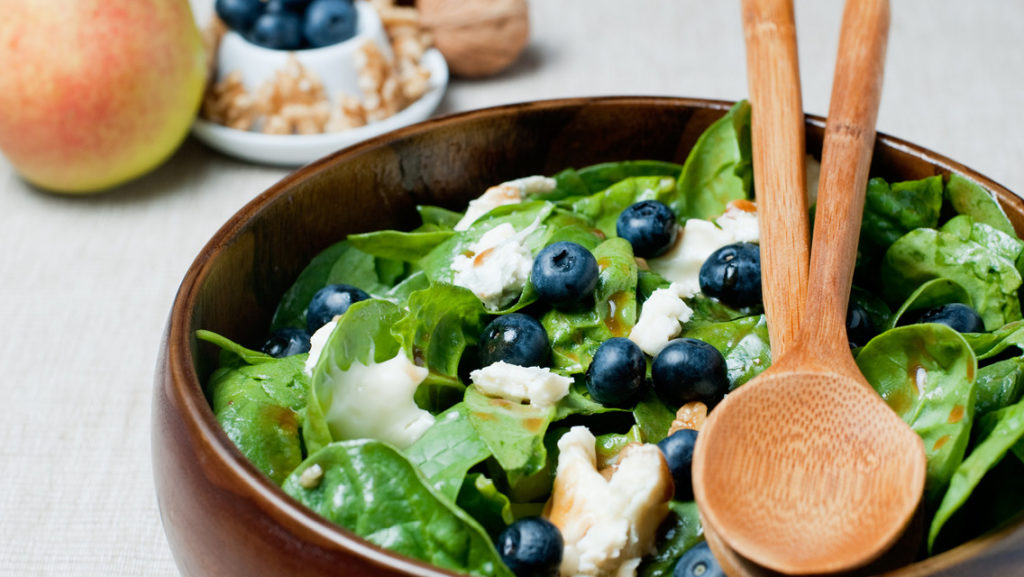
Serves four
Ingredients
- 1 1/2 tbs. balsamic vinegar
- 3 tbs. extra virgin olive oil
- 1 tsp. honey
- 1 5-ounce bag baby salad greens
- 1/2 cup crumbled goat cheese
- 1 cup fresh blueberries
- 1/4 cup walnut pieces
Directions
- Optional: 1 tablespoon of thin-sliced and julienned prosciutto ham per salad or 2 tablespoons of cooked pulled chicken breast per salad. Whisk vinegar, oil and honey in small bowl. Season to taste with salt and pepper.
- Place the greens in a large mixing bowl and toss with dressing. Divide the salad greens among four plates.
- Top each salad with 2 tablespoons crumbled goat cheese, 1/4 cup blueberries and 1 tablespoon walnuts. Top with optional protein if desired.
Per salad: Calories 260; protein 8g; total fat 22g; saturated fat 6g; carbohydrate 10g; dietary fiber 2g; cholesterol 15mg; sodium 125mg|
Blueberry Monsoon Smoothie
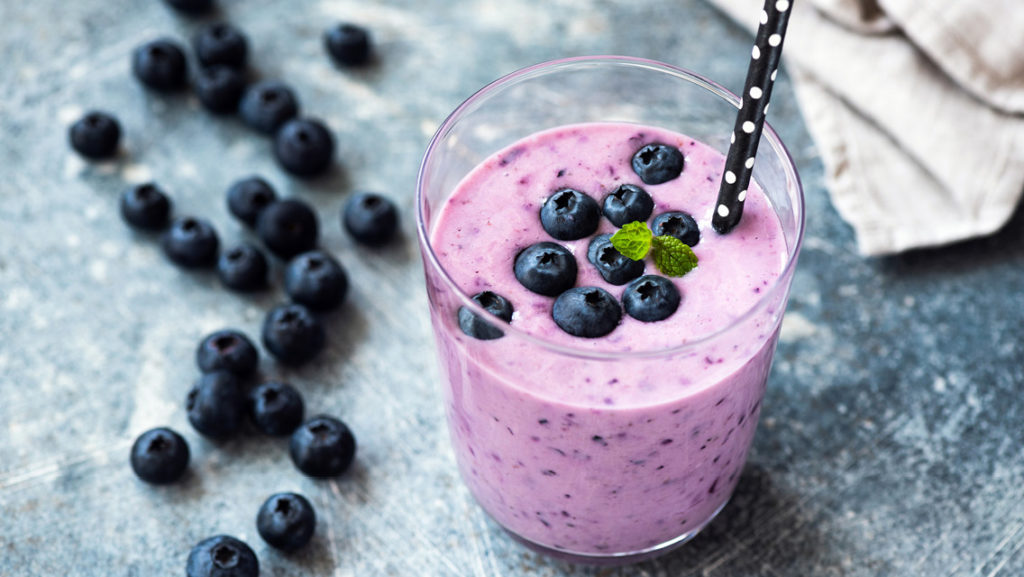
Makes one 12-ounce serving
Ingredients
- 1/2 cup frozen blueberries
- 1/2 cup organic blueberry pomegranate juice
- 1/2 cup blueberry or vanilla yogurt
- 2 tsp. pure maple syrup
- 1/4 tsp. ground cinnamon
- 1/4 tsp. ground flax seeds
- 1 tsp. whipped cream
- 1 tbs. blueberries for garnish
- 1 mint leaf
Directions
- Place blueberries, blueberry juice, yogurt, maple syrup, cinnamon and flaxseeds in a blender and blend until smooth. Pour into 12-ounce serving cup.
- Garnish with whip cream, blueberries on toothpick and a mint leaf.
Per serving:
Calories 290; protein 7g; total fat 6g; saturated fat 3g; carbohydrates 55g; dietary fiber 4g; cholesterol 15mg; sodium 80mg
This article originally appeared as “Blueberries” in the July/August 2010 issue of Experience Life.
This Post Has 0 Comments